
Nutrition for Menopause: What’s Happening in Your Body & How to Support It
Menopause is a natural transition, but that doesn’t mean you should “tough it out” or settle for feeling unlike yourself. With the right education and support, this phase of life can be a powerful opportunity to care for your body in new ways.
October is Menopause Awareness Month, but these conversations deserve space all year long. Many grew up in homes where hormone changes were private, confusing, or brushed aside, and the result is that too many navigate symptoms alone.
Let’s shift that.
This blog walks you through:
What’s actually happening in your body during perimenopause + menopause
Why symptoms vary so widely
Key nutrition priorities (simple + realistic)
How to protect long-term health, not just manage symptoms
What Changes During Perimenopause & Menopause?
Perimenopause can last several years as estrogen and progesterone begin to fluctuate and decline. This hormonal shift can affect how you sleep, think, digest, regulate mood, build muscle, and maintain bone strength.
Common symptoms may include:
Hot flashes & night sweats
Mood changes, irritability
Vaginal dryness
Brain fog or forgetfulness
Changes in appetite, weight, or body composition
Joint aches or fatigue
And much more
Menopause is reached after 12 consecutive months without a period, signalling the end of reproductive years and the start of a new, equally meaningful chapter!
4 Key Areas of Health to Focus On
1) Bone Health
Estrogen helps maintain bone density, so lower levels increase the risk for osteoporosis.
Helpful nutrition additions include:
Calcium + vitamin D + magnesium + vitamin K2
Foods like leafy greens, tofu, dairy or fortified alternatives, edamame, nuts, seeds, salmon with bones
Weight-bearing movement (strength training) is equally essential.
2) Heart Health
Estrogen helps regulate cholesterol and keep blood vessels flexible. As levels decrease, LDL cholesterol (harmful) may rise and HDL cholesterol (protective) may drop — even if diet nad lifestyle hasn’t changed at all.
Nutrition strategies include:
Add soluble fibre (oats, beans, lentils, flax, sweet potato, apple, banana)
Replace saturated fats with unsaturated fats (olive oil, avocado, fatty fish, nuts, seeds)
This is about adding, not restricting.
3) Muscle + Metabolic Support
During menopause, muscle loss becomes a key concern. Shifts in hormones (alongside aging and reduced activity for many people) can contribute to a gradual loss of muscle mass, which plays an important role in strength, metabolism, and overall health.
Focus on:
Protein at each meal (aim for evenly spread intake)
Lean animal proteins + plant proteins (soy is especially beneficial due to phytoestrogens)
Strength training 2–3x weekly (work with a personal trainer to build a customized and safe routine)
4) Brain Health + Cognitive Function
After menopause, protecting cognitive function becomes increasingly important.
The risk of cognitive decline, including Alzheimer’s disease, rises with age, and women represent a disproportionate number of Alzheimer’s cases.
Prioritizing brain health helps support memory, focus, and long-term independence:
MIND-style eating: leafy greens, berries, whole grains, legumes, nuts, olive oil, and fish
Pair with sleep hygiene, stress support, and movement
You Don’t Have to Figure This Out Alone
Menopause is not a failure, a decline, or an ending. It’s a transition. With supportive guidance, small nutrition and lifestyle shifts, and realistic habits, you can feel clear, strong, grounded, and informed.
If you want personalized help integrating this into real life (not perfection), our team of Canadian Registered Dietitians and Nurse Practitioner can help.
You deserve care, not confusion.

Hi! I’m Trista
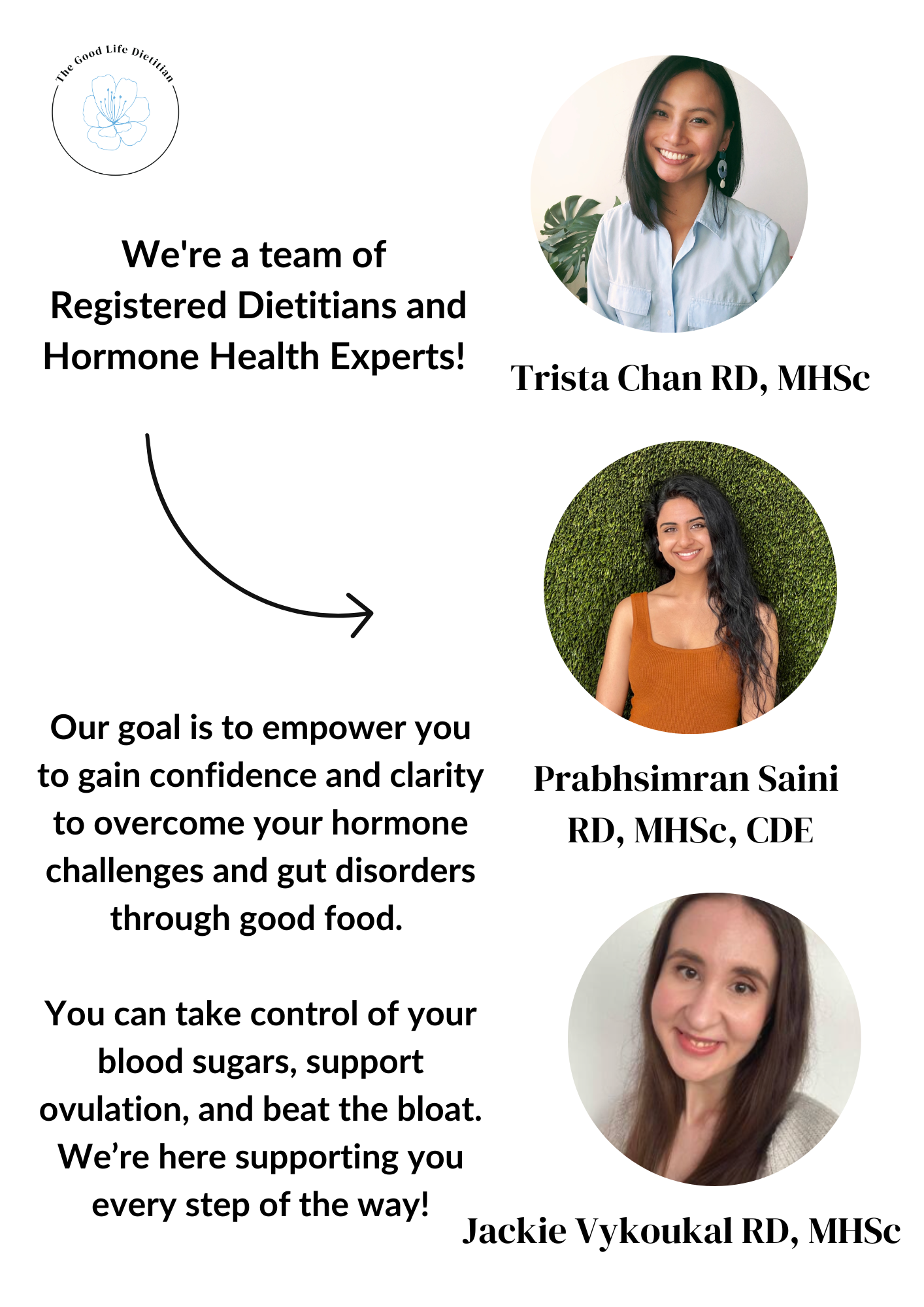
A Registered Dietitian and reproductive health expert. I’m here to help you gain confidence to overcome your Polycystic Ovary Syndrome and digestive health woes, while bettering your relationship with food.
CATEGORIES


Ready for Support?
If you’re craving a calmer, more sustainable approach to nutrition, our dietitians’ 1-on-1 nutrition programs can help you personalize gentle nutrition, stabilize energy and digestion, and build habits that last - no rigid rules required.
References
Ataei Kachouei A, Singar S, Wood A, Flatt JD, Rosenkranz SK, Rosenkranz RR, Akhavan NS. Cardiovascular Risk Factors, Alzheimer's Disease, and the MIND Diet: A Narrative Review from Molecular Mechanisms to Clinical Outcomes. Nutrients. 2025 Jul 16;17(14):2328. doi: 10.3390/nu17142328. PMID: 40732953; PMCID: PMC12299063.
Glenn AJ, Guasch-Ferré M, Malik VS, Kendall CWC, Manson JE, Rimm EB, Willett WC, Sun Q, Jenkins DJA, Hu FB, Sievenpiper JL. Portfolio Diet Score and Risk of Cardiovascular Disease: Findings From 3 Prospective Cohort Studies. Circulation. 2023 Nov 28;148(22):1750-1763. doi: 10.1161/CIRCULATIONAHA.123.065551. Epub 2023 Oct 25. PMID: 37877288; PMCID: PMC10841173.
Inaraja V, Thuissard I, Andreu-Vazquez C, Jodar E. Lipid profile changes during the menopausal transition. Menopause. 2020 Jul;27(7):780-787. doi: 10.1097/GME.0000000000001532. PMID: 32187130.
Kodete, C. S., Thuraka, B., Pasupuleti, V., & Malisetty, S. (2024). Hormonal Influences on Skeletal Muscle Function in Women across Life Stages: A Systematic Review. Muscles, 3(3), 271-286. https://doi.org/10.3390/muscles3030024
Ryczkowska K, Adach W, Janikowski K, Banach M, Bielecka-Dabrowa A. Menopause and women's cardiovascular health: is it really an obvious relationship? Arch Med Sci. 2022 Dec 10;19(2):458-466. doi: 10.5114/aoms/157308. PMID: 37034510; PMCID: PMC10074318.