
PCOS 101: Looking Beyond Your Period to the Whole Body
You might first hear the word PCOS when your period disappears for months, shows up unpredictably, or you’re told to “come back when you want to get pregnant.”
Maybe you’re also dealing with cystic acne, intense carb cravings, brain fog, or that wired-but-exhausted feeling that never quite goes away. You’re trying to “do everything right” and yet your body doesn’t seem to respond the way you expect.
If that sounds familiar, you’re not alone. PCOS is one of the most common hormonal conditions and also one of the most misunderstood.
The good news? Understanding what’s actually happening in your body can take you out of the blame spiral and into a calmer, more compassionate approach to food, movement, and medical care.
What Is PCOS?
At its core, PCOS is a hormonal (endocrine) and metabolic condition.
That means it affects:
How your body produces and responds to hormones, including signals between the brain, ovaries, and the rest of the body
How you regulate blood sugars and the hormone insulin
How your ovaries function, including ovulation, follicle development, and androgen production
How your body manages energy, inflammation, and overall metabolic health
Most people are taught to see PCOS purely through a reproductive lens:
Irregular or absent periods
Difficulty conceiving
Excessive follicles on the ovaries
But PCOS can show up far beyond the menstrual cycle. For example, you might notice:
Skin changes like cystic acne, unwanted facial/body hair, or hair thinning
Energy fluctuations: wired and tired, low energy mornings, mid-day crashes
Blood sugar symptoms like shakiness, intense cravings, brain fog
Digestive shifts such as bloating, reflux or bowel irregularities
Mood & nervous system changes like anxiety, overwhelm, irritability or low mood
A key driver for many people is insulin resistance (regardless of body size), meaning cells don’t respond efficiently to insulin, causing insulin levels and blood sugars to rise. Elevated insulin can influence appetite, energy, fat storage, and increase risk for cardiometabolic diseases.
There’s also often an increase in androgens (like testosterone and DHEA-S), which can:
Disrupt ovulation
Trigger acne
Cause unwanted hair growth
Contribute to hair thinning on the scalp
All of this is why PCOS is best understood as a whole-body condition not a “period problem.”
Why the Name "PCOS" Can Feel Misleading
Despite the name, PCOS isn’t just an ovarian condition. Not everyone with PCOS has cysts or irregular cycles. It’s a condition that involves hormone signaling between the brain and ovaries, as well as metabolism, inflammation, and gut health.
Because of this, researchers, clinicians, and patients have been exploring whether PCOS should be renamed to better reflect its full complexity.
If you’ve ever felt confused by the name, you’re not alone and your lived experience matters in the conversation.
Frequently Asked Questions about PCOS
1. “Why Am I Gaining Weight No Matter What I Eat?”
First, let’s be clear: BMI is an outdated and incomplete measure of individual health. It doesn’t capture metabolic health, hormone function, genetics, stress, or lived experience.
Yet we live in a deeply weight-centric world where body weight is still treated as a proxy for health, and people with PCOS experience significant weight stigma because of this. This is globally reported.
This is one of the most common, and emotionally loaded, questions among people navigating PCOS. And it makes complete sense. Many people feel like their body gains or holds onto weight regardless of how much dieting they do.
This isn’t a failure of willpower. It’s not because you’re doing something “wrong.”
There’s more going on under the surface
Intrinsic influences may include:
Genetic factors: influence body size, shape, fat distribution, and metabolic traits
Appetite-stimulating gut hormones: signaling that can increase hunger and drive intake
Appetite-suppressing gut hormones: altered signaling may impair satiety and fullness cues
Subjective hunger and satiety regulation: differences in perceived hunger, fullness, and satisfaction
Meal-induced thermogenesis: variability in post-prandial energy expenditure
Resting energy expenditure: some evidence suggests modest differences in basal metabolic rate in PCOS populations
External influences may include:
Social determinants of health (SDOH): including income, food access, housing stability, time constraints, and caregiving demands
Sleep quantity and quality, which influence appetite regulation, insulin sensitivity, and energy balance
Gaps or delays in accessible, supportive healthcare, including weight-biased care environments
Chronic stress and nervous system dysregulation, affecting metabolic and hormonal regulation
Weight stigma and diet culture, often contributing to cycles of restriction and weight regain
Many people with PCOS have been on years of diets, often swinging between:
Restrict → “fall off track” → guilt → restrict again → repeat
This pattern, known as weight cycling, is common and is very harmful to health - even increasing risk for death.
A new perspective
It's completely valid to want weight loss in a weight-centric world where it may also feel more realistic and affirming to shift the lens from:
“Weight loss is the treatment
“Let’s focus on establishing sustainable healthier habits.”
Evidence-supported goals that improve metabolic and hormone health include:
Improving insulin sensitivity and blood sugar control
Reducing chronic inflammation
Supporting mental health
Sleep + recovery practices
Sustainable, enjoyable movement
Weight changes become one possible outcome of focusing on the above, not a measure of success.
2. “Do I Need to Take Progestin, or Can Food Alone Regulate My Period?”
Progestin is a synthetic form of progesterone often prescribed when cycles are very long or absent. Its job is to trigger a bleed when ovulation isn’t happening regularly.
Why this matters
Without regular bleeds, estrogen can continue to build up the uterine lining. Over time, this may increase the risk of endometrial hyperplasia and endometrial cancer.
That’s why many providers aim for a minimum number of bleeds per year, regardless of whether they are natural or medication-induced.
Where nutrition and lifestyle fit in
Food, movement, sleep, stress, and nervous system support can absolutely help with:
Blood sugar stability
Ovulation support for some people
Symptom relief and energy balance
But PCOS is chronic and multifactorial, and not everybody will ovulate regularly with lifestyle interventions alone. Holistic health includes honoring all supportive tools: nutrition + lifestyle + medical care.
If you’re wrestling with fear or confusion around progestin, consider discussing with your provider:
risks of not inducing bleeds
options available
how lifestyle strategies fit alongside medication needs
3. “Do I Need to Cut Carbs or Go Keto for PCOS?”
Because insulin resistance plays a major role in PCOS, it’s understandable that carbohydrates get a lot of attention.
Keto may provide some short-term improvements for some, but there is limited high-quality research specifically examining keto diets in PCOS.
In practice, very-low-carbohydrate approaches may reduce dietary fibre and fermentable carbohydrates, which can negatively affect gut microbial diversity, worsen digestive symptoms, and increase food cravings.
What matters more than cutting carbs
Distributing carbohydrates evenly throughout the day
Pairing carbs with protein and fats
Choosing fiber-rich, slower-digesting carbs
Taking into account your unique tolerance, activity level, and preferences
Instead of “How little can I eat?” we can shift to: “How can I fuel my body in a way that supports stable energy and blood sugar?”
A balanced meal can is more effective and far more sustainable than rigid rules.
4. “Is Vigorous Exercise Bad for My Hormones?”
You might have come across messaging encouraging only restorative movement with PCOS. While gentle movement can be supportive, avoiding all intense exercise is not necessary for everyone.
Understanding cortisol
Cortisol naturally increases during exercise and that’s normal. What matters is whether cortisol comes back down afterward during recovery.Often, the issue is not the workout it’s the recovery conditions, including:
Adequate pre- and post-exercise fuel
Quality sleep
Periods of rest
Emotional regulation and coping tools
Supportive “3 R’s” for post-exercise
1️⃣ Refuel with carbohydrates
2️⃣ Repair with protein
3️⃣ Rehydrate with fluids
If intense workouts feel good in your body physically and mentally — they do not need to be avoided.
If your body is asking for more restorative or low-impact movement, that’s valid too.
Listening > policing.
The Takeaway: PCOS Deserves a Bigger, Kinder Framework
PCOS is not a personal failure, a lack of discipline, or a condition you caused by eating or moving “wrong.”
It’s a complex, whole-body condition shaped by hormones, metabolism, insulin signaling, nervous system health, genetics, and lived context.
When care focuses only on periods, weight, or fertility timelines, it misses the bigger picture — and often leaves people feeling blamed, dismissed, or stuck in cycles that don’t support long-term health.
A more effective and sustainable approach to PCOS looks like this:
Understanding your physiology instead of fighting it
Supporting insulin sensitivity, energy regulation, and inflammation
Nourishing your body consistently rather than restricting it
Choosing movement that feels supportive, not punishing
Using medical tools when needed, without shame
Measuring success by symptoms, energy, and quality of life — not just the scale
You don’t need to do PCOS perfectly to make progress. You need accurate information, compassionate care, and strategies that work with your body - not against it.
If you’ve ever felt like PCOS care wasn’t built for you, you’re right.
And that’s exactly why this broader, more humane framework matters.
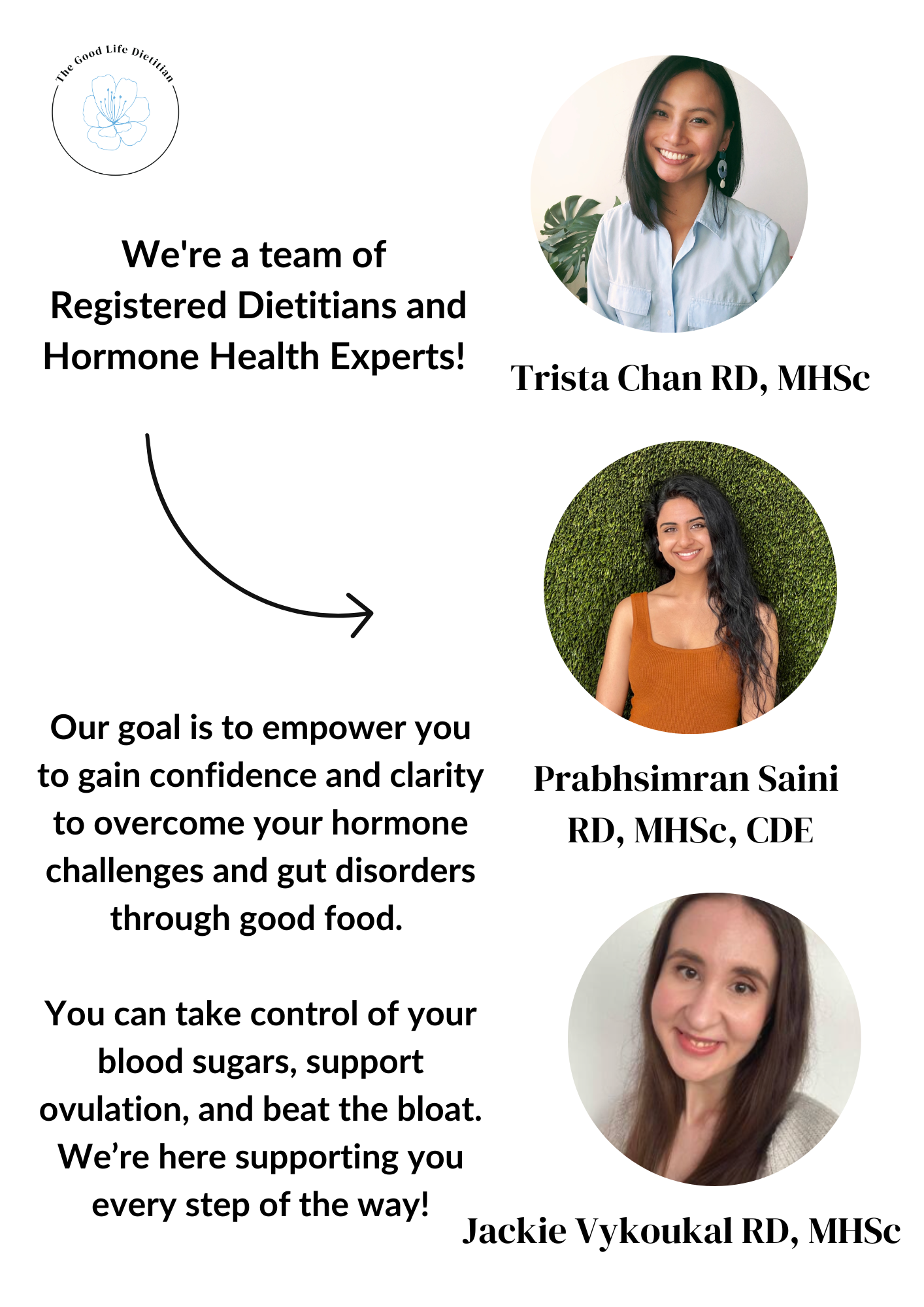
At Nest & Nurture, our team of registered dietitians and clinicians specializes in PCOS care that goes beyond weight loss and fertility-only frameworks.
We support you with:
Evidence-informed nutrition and lifestyle care for insulin resistance, metabolic health, and cycle regulation
A non–weight-centric, stigma-aware approach
Individualized plans that respect your physiology, preferences, and lived context
Collaboration with medical providers when medication or hormonal support is needed
Whether you’re newly diagnosed, feeling stuck after years of conflicting advice, or looking for care that finally makes sense — we’re here to help.
👉 Book a consultation or learn more about our PCOS programs to explore what support could look like for you.

Hi! I’m Trista
A Registered Dietitian and reproductive health expert. I’m here to help you gain confidence to overcome your Polycystic Ovary Syndrome and digestive health woes, while bettering your relationship with food.
CATEGORIES


Ready for Support?
If you’re craving a calmer, more sustainable approach to nutrition, our dietitians’ 1-on-1 nutrition programs can help you personalize gentle nutrition, stabilize energy and digestion, and build habits that last - no rigid rules required.
REFERENCES
Aboeldalyl S, James C, Seyam E, Ibrahim EM, Shawki HE, Amer S. The Role of Chronic Inflammation in Polycystic Ovarian Syndrome-A Systematic Review and Meta-Analysis. Int J Mol Sci. 2021 Mar 8;22(5):2734. doi: 10.3390/ijms22052734. PMID: 33800490; PMCID: PMC7962967.
Álvarez-Blasco F, Luque-Ramírez M, Escobar-Morreale HF. Diet composition and physical activity in overweight and obese premenopausal women with or without polycystic ovary syndrome. Gynecol Endocrinol. 2011 Dec;27(12):978-81. doi: 10.3109/09513590.2011.579658. Epub 2011 May 24. PMID: 21609197.
Benjamin JJ, Kuppusamy M, Koshy T, Kalburgi Narayana M, Ramaswamy P. Cortisol and polycystic ovarian syndrome - a systematic search and meta-analysis of case-control studies. Gynecol Endocrinol. 2021 Nov;37(11):961-967. doi: 10.1080/09513590.2021.1908254. Epub 2021 Apr 5. PMID: 33818258.
Johnson JE, Daley D, Tarta C, Stanciu PI. Risk of endometrial cancer in patients with polycystic ovarian syndrome: A meta‑analysis. Oncol Lett. 2023 Mar 8;25(4):168. doi: 10.3892/ol.2023.13754. PMID: 36960190; PMCID: PMC10028221.
Juhász AE, Stubnya MP, Teutsch B, Gede N, Hegyi P, Nyirády P, Bánhidy F, Ács N, Juhász R. Ranking the dietary interventions by their effectiveness in the management of polycystic ovary syndrome: a systematic review and network meta-analysis. Reprod Health. 2024 Feb 22;21(1):28. doi: 10.1186/s12978-024-01758-5. PMID: 38388374; PMCID: PMC10885527.
Mei S, Ding J, Wang K, Ni Z, Yu J. Mediterranean Diet Combined With a Low-Carbohydrate Dietary Pattern in the Treatment of Overweight Polycystic Ovary Syndrome Patients. Front Nutr. 2022 Apr 4;9:876620. doi: 10.3389/fnut.2022.876620. PMID: 35445067; PMCID: PMC9014200.
Moran LJ, Brown WJ, McNaughton SA, Joham AE, Teede HJ. Weight management practices associated with PCOS and their relationships with diet and physical activity. Hum Reprod. 2017 Mar 1;32(3):669-678. doi: 10.1093/humrep/dew348. PMID: 28069732.
Moran LJ, Ranasinha S, Zoungas S, McNaughton SA, Brown WJ, Teede HJ. The contribution of diet, physical activity and sedentary behaviour to body mass index in women with and without polycystic ovary syndrome. Hum Reprod. 2013 Aug;28(8):2276-83. doi: 10.1093/humrep/det256. Epub 2013 Jun 15. PMID: 23771201.
Noormohammadi M, Eslamian G, Malek S, Shoaibinobarian N, Mirmohammadali SN. The association between fertility diet score and polycystic ovary syndrome: A Case-Control study. Health Care Women Int. 2022 Jan-Mar;43(1-3):70-84. doi: 10.1080/07399332.2021.1886298. Epub 2021 Apr 2. PMID: 33797335.
Patten RK, Boyle RA, Moholdt T, Kiel I, Hopkins WG, Harrison CL, Stepto NK. Exercise Interventions in Polycystic Ovary Syndrome: A Systematic Review and Meta-Analysis. Front Physiol. 2020 Jul 7;11:606. doi: 10.3389/fphys.2020.00606. PMID: 32733258; PMCID: PMC7358428.
Teede HJ, Joham AE, Paul E, Moran LJ, Loxton D, Jolley D, Lombard C. Longitudinal weight gain in women identified with polycystic ovary syndrome: results of an observational study in young women. Obesity (Silver Spring). 2013 Aug;21(8):1526-32. doi: 10.1002/oby.20213. Epub 2013 Jul 2. PMID: 23818329.
Teede, H. J., Moran, L. J., Morman, R., Gibson, M., Dokras, A., Berry, L., Laven, J. S. E., Joham, A., Piltonen, T. T., Costello, M. F., Norman, R. J., & Bahri Khomami, M. (2025). Polycystic ovary syndrome perspectives from patients and health professionals on clinical features, current name, and renaming: A longitudinal international online survey. eClinicalMedicine, 84, 103287. https://doi.org/10.1016/j.eclinm.2025.103287
Zhang X, Zheng Y, Guo Y, Lai Z. The Effect of Low Carbohydrate Diet on Polycystic Ovary Syndrome: A Meta-Analysis of Randomized Controlled Trials. Int J Endocrinol. 2019 Nov 26;2019:4386401. doi: 10.1155/2019/4386401. PMID: 31885557; PMCID: PMC6899277.